

In an era dominated by cloud-based streaming services and ubiquitous high-speed internet, the concept of offline media might seem like a relic of the past. However, for digital nomads, remote travelers, and tech enthusiasts, the limitations of the cloud become glaringly apparent the moment a Wi-Fi signal drops or a streaming license expires. Daveed Walzer, a seasoned maker and technophile, recently addressed this gap by engineering the "StreamCrate"—a bespoke, high-capacity portable media server built on the Raspberry Pi 4 architecture.
This project represents more than just a storage device; it is a sophisticated marriage of hardware modification, automated software transcoding, and localized networking. With a 5TB capacity and a ten-hour battery life, the StreamCrate serves as a blueprint for the next generation of "de-clouded" personal entertainment.
Main Facts: The StreamCrate at a Glance
The StreamCrate is a self-contained ecosystem designed to store, manage, and play a massive media library without requiring an external internet connection. At its core, the device is built to be a "grab-and-go" solution for environments ranging from hotel rooms in the French Alps to camper vans in remote wilderness.
Key Specifications:
- Processing Power: Raspberry Pi 4 Model B, chosen for its balance of power efficiency and peripheral support.
- Storage Capacity: A 5TB 2.5-inch SATA Hard Disk Drive (HDD), capable of holding thousands of hours of high-definition content.
- Power Supply: A 20,000mAh external power bank, providing approximately ten hours of continuous playback.
- Operating System: Raspberry Pi OS Lite, a stripped-back version of the OS designed for maximum performance and stability.
- Software Stack: Jellyfin (for media serving), Kodi (for local playback), and Tdarr (for background library transcoding).
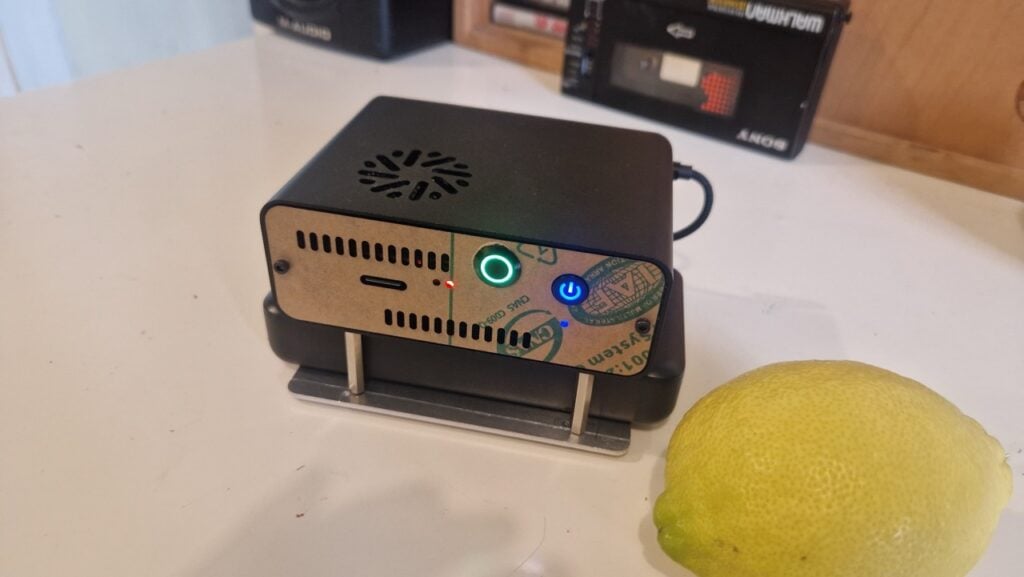
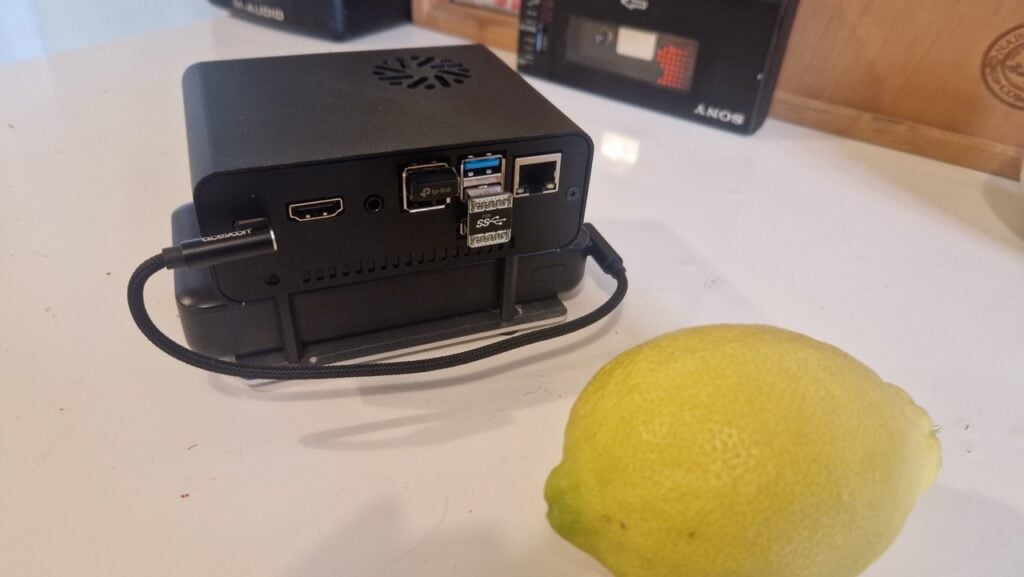
- Physical Footprint: Weighing just over two pounds and roughly the size of a grapefruit, the device is housed in a modified Geekworm NAS case.
Chronology: From Commercial Limitations to Custom Innovation
The journey toward the StreamCrate began not with a new idea, but with the failure of an old one. For years, Walzer relied on a 2TB WD My Passport Wireless Pro, purchased in 2017. While revolutionary at the time, the device eventually became a bottleneck for his evolving needs.
2017–2023: The Catalyst of Frustration
The WD My Passport served Walzer well during his time working remotely in the French Alps. However, as his media library grew, the 2TB limit became stifling. Furthermore, the proprietary firmware was locked to the Plex media server ecosystem. While Plex is a market leader, Walzer preferred Jellyfin—an open-source alternative that excels in local-only environments without requiring "phoning home" to a central server to authenticate.
The final straw was the lack of an HDMI output. If Walzer forgot his Chromecast adapter, he was unable to interface with hotel televisions, rendering his massive library useless on larger screens.
Late 2023: The Prototyping Phase
Inspired by a successful week-long project building a multi-room audio system using a Raspberry Pi 3 and OwnTone, Walzer turned his attention to a hardware replacement for his media server. He consulted generative AI to determine the feasibility of building a DIY version of the WD Passport. The AI’s "yes" came with an estimated $200 price tag and a suggestion for the Geekworm Raspberry Pi 4 NAS case—a compact enclosure with a built-in 2.5-inch SATA bay.
Early 2024: The Build and the Hardware "Wall"
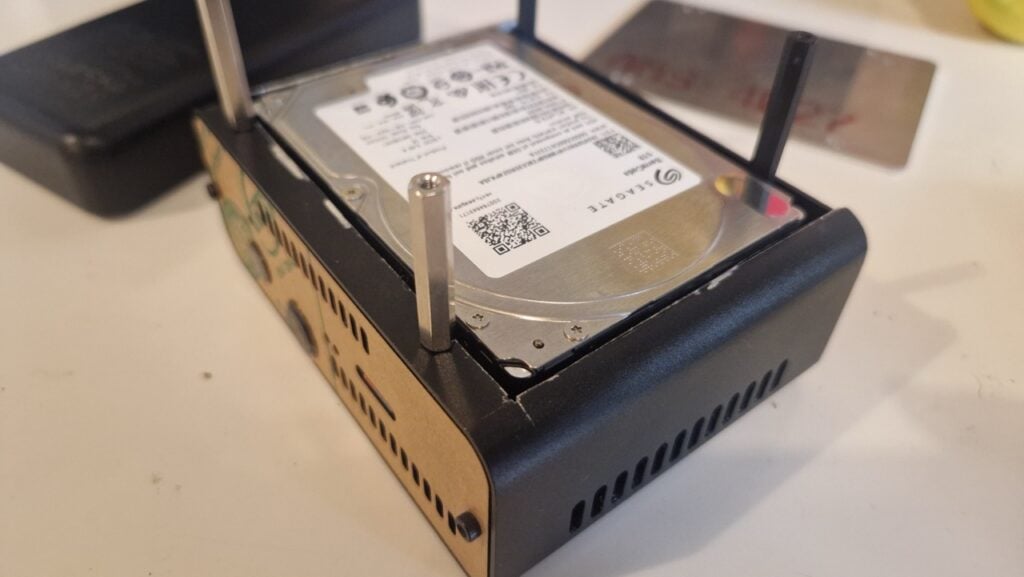
The construction phase immediately hit a physical snag. Standard 2TB drives are typically 7mm or 9.5mm thick, which the Geekworm case was designed to accommodate. However, 5TB 2.5-inch drives are significantly thicker (usually 15mm) due to the extra platters required for high-density storage.
Walzer was forced to physically modify the aluminum case, cutting into the structure to allow the drive to fit and fabricating a custom baseplate to seal the unit. This modification was essential to maintain the "portable" aspect of the project while quintupling the storage of his previous commercial device.
Mid-2024: The Transcoding Breakthrough
Once the hardware was assembled, the software presented a new challenge. While the Raspberry Pi 4 is a capable server, it struggles as a player for certain modern video codecs. Specifically, 10-bit depth and 4K H.264 files proved too taxing for the Pi’s hardware acceleration when running Kodi.
Walzer spent days developing an automated pipeline. He utilized Tdarr, a distributed transcoding tool, running in a Docker container on his master home NAS. This system analyzed his entire library and automatically converted any incompatible files into a format the Raspberry Pi could play natively before syncing them to the StreamCrate.
Supporting Data: Software Architecture and Connectivity
The StreamCrate’s utility is derived from its "hybrid" software approach, which allows it to function as both a server and a client simultaneously.
The Connectivity Matrix
To ensure the device works "anywhere," Walzer implemented three distinct connection methods:
- HDMI Direct Play: When the Raspberry Pi detects an HDMI connection, it automatically launches the Kodi media player. An Amazon Fire TV stick remote is paired via Bluetooth to allow for a familiar, couch-friendly interface.
- Wireless Hotspot: Using an external USB Wi-Fi adapter, the StreamCrate creates its own local Wi-Fi network. This allows tablets, laptops, or smart TVs to connect to the Jellyfin server even in the absence of a local router.
- Network Integration: When available, the device can join an existing Wi-Fi network to stream content to other devices on that network.
Power and Thermal Management
A 20,000mAh battery was selected to ensure the device could survive long flights or nights in a camper van. Under load—spinning the 5TB HDD and running the Raspberry Pi 4’s CPU—the device draws significant power. The aluminum Geekworm case acts as a heat sink, ensuring that the Pi does not thermal throttle during high-bitrate playback.
Official Responses: Insights from the Maker
In documenting the project, Daveed Walzer highlighted the shift in perspective that DIY hardware allows. He noted that the project wasn’t just about storage; it was about the "freedom of the local-only ecosystem."
"I have my entire library with me, playing on almost anything, anywhere," Walzer stated. He emphasized that the hardest part was not the assembly, but the logic behind the library management. "Determining what needed to be converted and how to automate it so it all happened in the background… that was the hardest part. It took days of tweaking."
Walzer also reflected on the emotional value of the build, describing the satisfaction of "settling in for an early night in the camper-van to finish an episode of Adventure Time and the kiddo nodding off against me after a big day of big experiences." For Walzer, the StreamCrate is a tool that facilitates family moments by removing the technical frustrations of modern streaming.
Implications: The Future of Personal Media Infrastructure
The StreamCrate project arrives at a pivotal moment in consumer technology. As streaming services increase prices, introduce ads, and occasionally remove purchased content from libraries, there is a growing movement toward "Digital Self-Sovereignty."
1. The Rise of the "De-Clouded" Nomad
Walzer’s project demonstrates that for a relatively low cost (approx. $200–$300), an individual can build a system that outperforms commercial products from major brands like Western Digital. This suggests a shift where enthusiasts no longer wait for manufacturers to update "legacy" portable drives, instead opting for modular, repairable DIY solutions.
2. AI as a Collaborative Engineer
The role of AI in this project is noteworthy. Walzer used AI not to write the code for him, but to act as a feasibility consultant and cost-estimator. This highlights a trend where AI lowers the barrier to entry for complex engineering projects, allowing hobbyists to tackle hardware and software integration that would have previously required specialized professional knowledge.
3. The Raspberry Pi as a Mature Platform
While the Raspberry Pi 5 is now available, Walzer’s choice of the Pi 4 underscores the maturity of the older platform. The abundance of third-party cases, stable drivers, and community support made the Pi 4 the logical choice for a mission-critical travel device. However, the transcoding issues Walzer faced suggest that as 4K and 10-bit media become the standard, the extra horsepower of the Pi 5 may soon become a necessity for future "Crate" iterations.
4. Open-Source Superiority in Niche Environments
The preference for Jellyfin over Plex in this project is a microcosm of a larger debate in the tech community. For portable use, software that requires an internet connection for "home" authentication is a liability. The StreamCrate proves that open-source software, when properly configured, offers a level of reliability in "edge" environments that proprietary systems cannot match.
In conclusion, the StreamCrate is a testament to the power of the maker community. By identifying the failures of commercial electronics and applying a mix of physical modification and sophisticated software automation, Daveed Walzer has created a device that ensures the "big experiences" of travel are always accompanied by the comforts of home media.